




LIVE CLIENT BUSINESS STRATEGY
HULT × INTUIT BUSINESS CHALLENGE
A go-to-market strategy for QuickBooks, built around the one UK sole-trader segment nobody was targeting: Uber private-hire drivers.
Market Research, Persona Development, Pitch Deck Design
Funnel & Journey Mapping, Canva
01 OVERVIEW
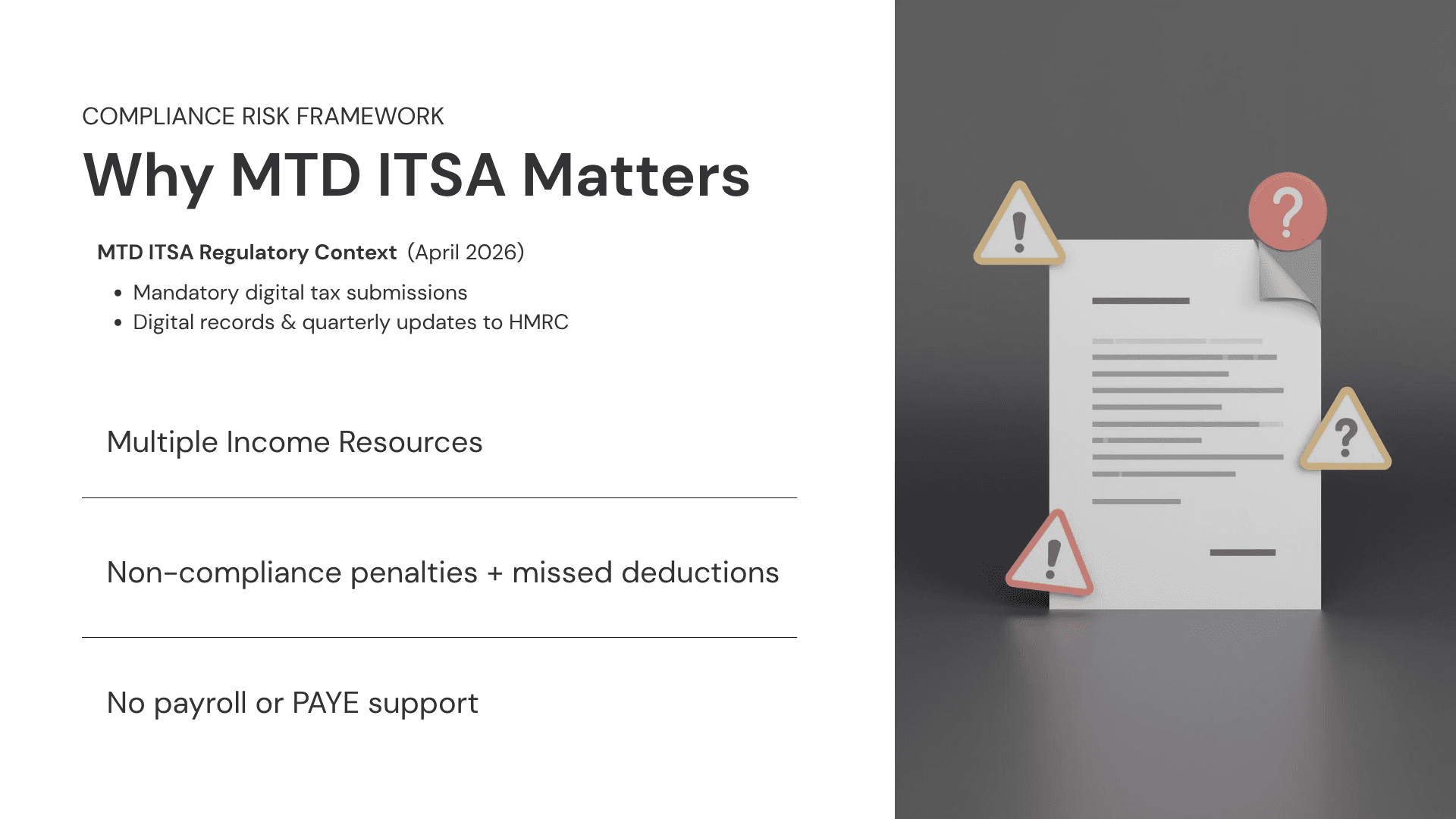
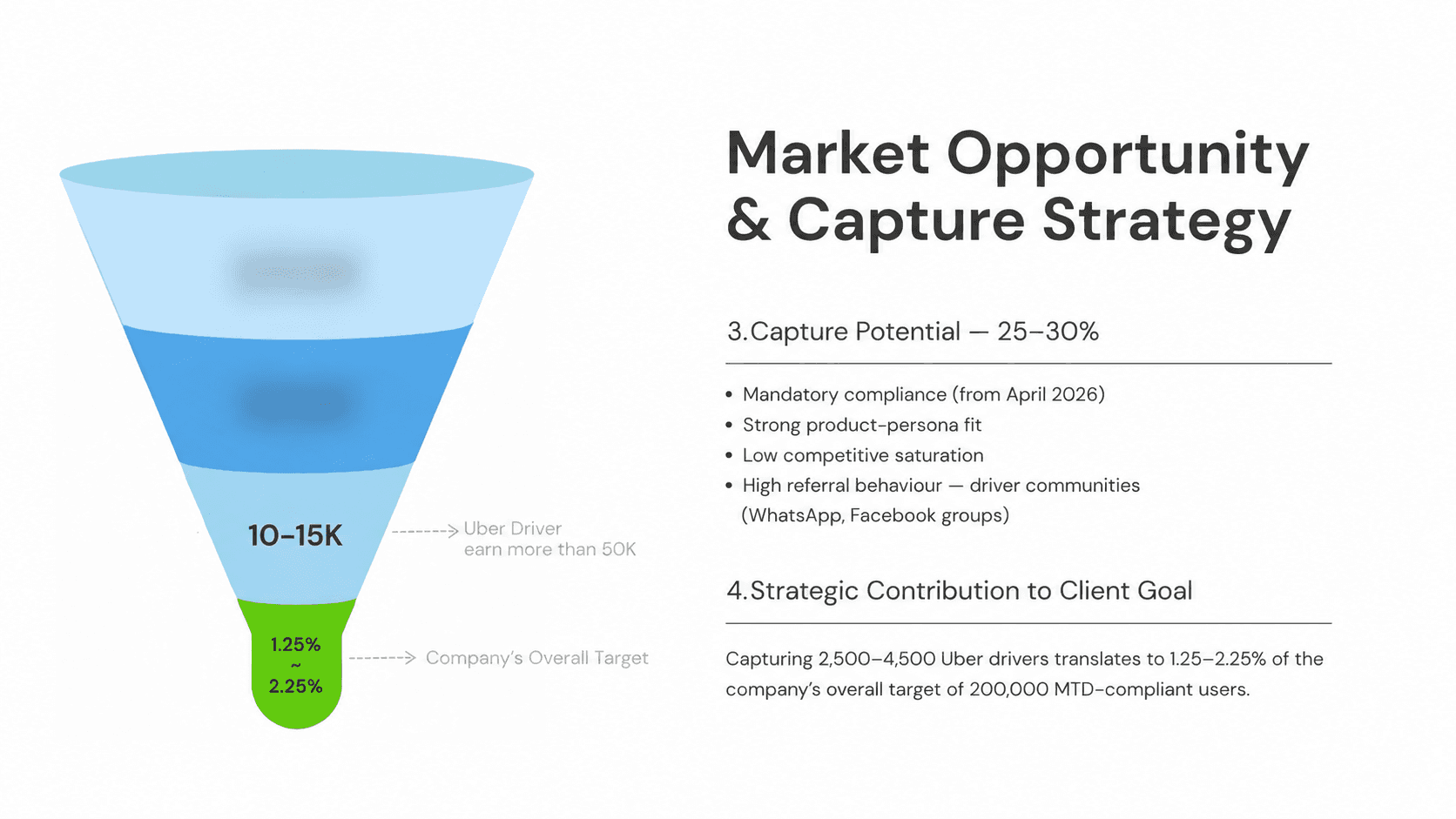
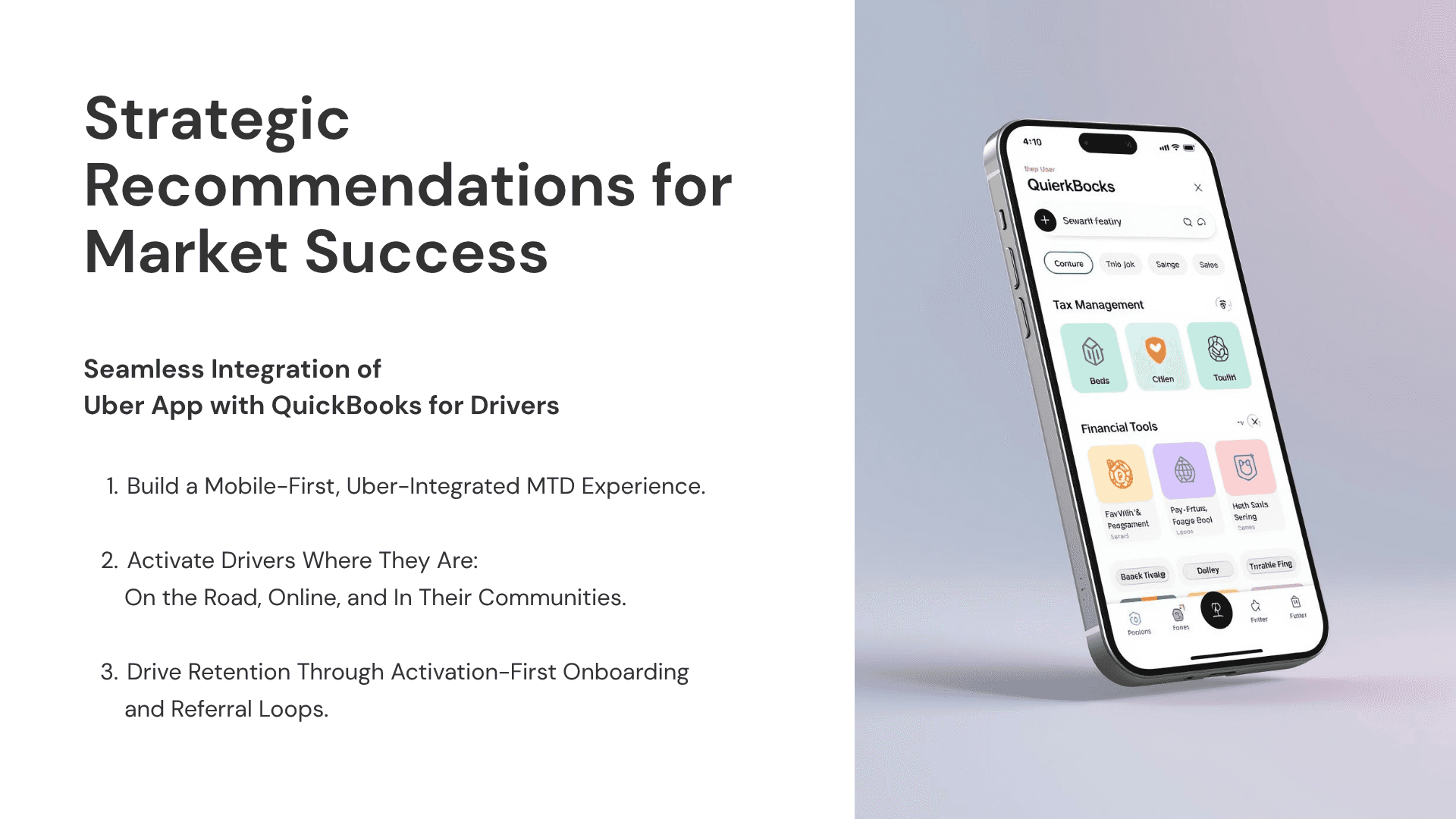
Intuit brought us a live challenge around MTD ITSA, the UK's new digital tax mandate that moves self-employed people above an income threshold from spreadsheets onto software by April 2026, with QuickBooks looking to grow its sole trader base before the deadline. Most teams would go after the broadest possible sole trader, we went narrower instead: Uber private-hire drivers, a segment the brief never named. About 100,000 people drive for Uber in the UK, and 10 to 15% of them earn above the threshold, putting 10,000 to 15,000 drivers in scope, with mobile-first habits and tight community channels that most sole-trader marketing ignores completely. We built a go-to-market plan around that one segment: a mobile-first, Uber-integrated tax experience, activation through the WhatsApp groups and driver hubs they already use, and a referral programme that gives both sides 50% off.
02 THE PRODUCT
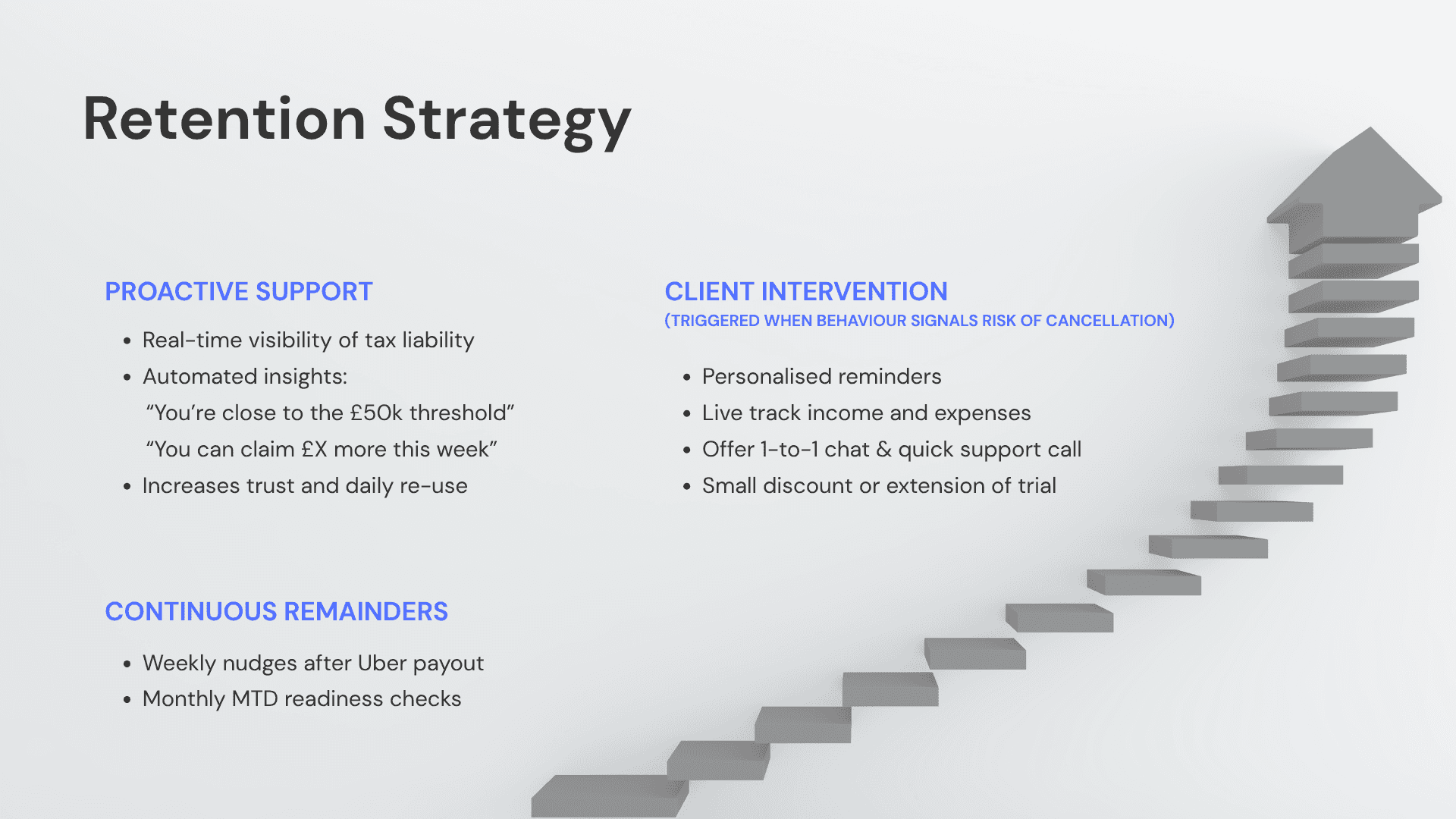
We grounded it in a persona we called Ahmed, a full-time driver working 60 to 72 hours a week who has no reliable way to know how much tax to set aside from a weekly payout. From there the plan had three parts: a six-step onboarding checklist so we always know where a driver is in the journey, retention nudges that catch people before they drop off, and activation through partnerships with Uber, licensing centres, and insurance providers instead of generic paid social.
03 VALUE
At a realistic 25 to 30% capture rate, driven by mandatory compliance, low competitive saturation, and high referral behaviour in driver communities, the plan translates to 2,500 to 4,500 Uber drivers onboarded from one precisely defined segment.
04 WHAT THIS TAUGHT ME
The instinct in a challenge this size is to go broad, a bigger addressable market feels like a safer thing to present to a client. Narrowing to Uber drivers felt riskier in the room, but it's what made every recommendation sharper, the channels, the messaging, the retention mechanics all became obvious once we knew exactly who we were building for. The lesson wasn't about tax software, it was that a go-to-market strategy gets stronger when it gives up coverage for precision.